Rural microtransit software
Small systems live on telephone booking, long empty miles and a dispatcher who already knows the riders. Software should shorten the board, not invent a city marketplace.
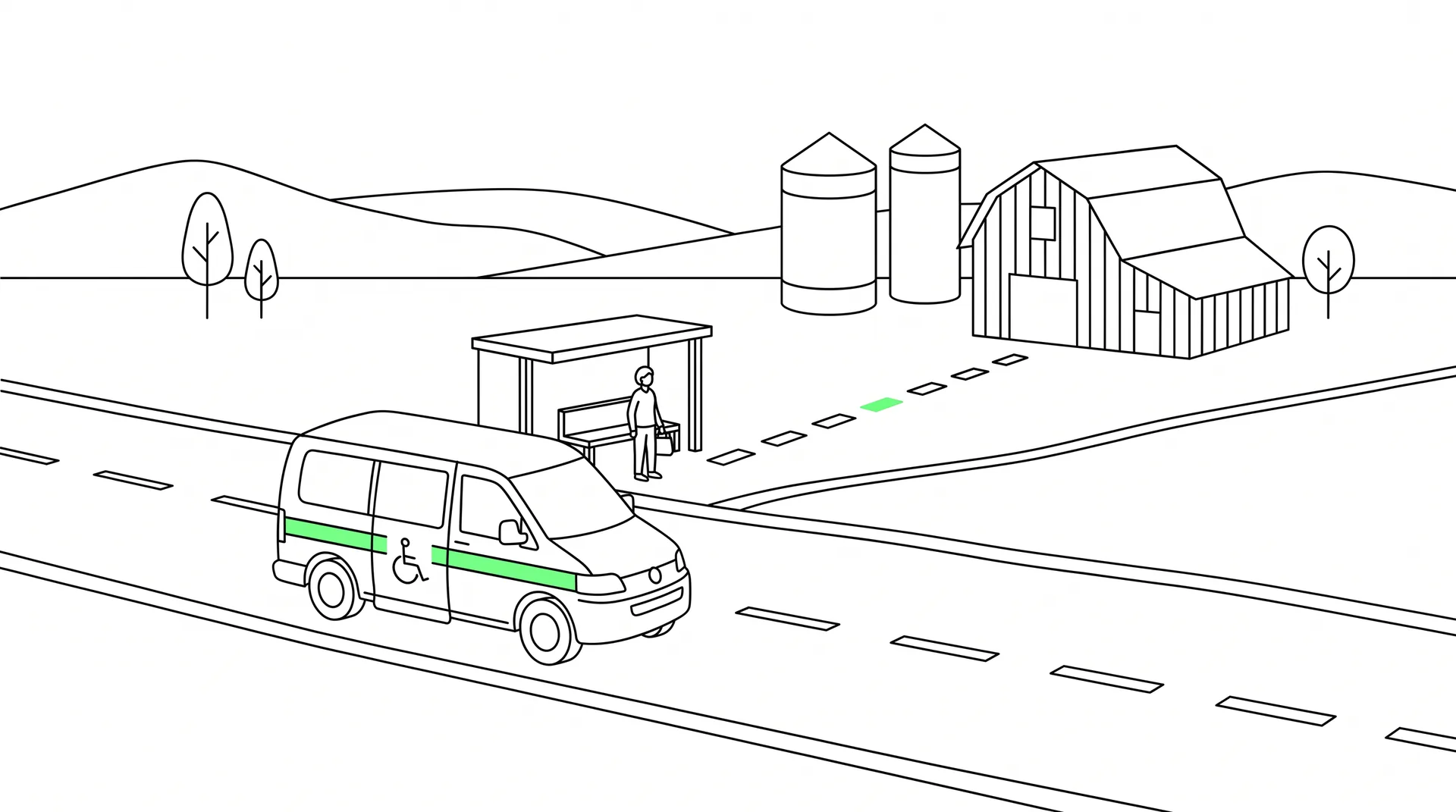



How the platform is used
Rural US demand response is often funded with FTA Section 5311 resources and operated by a city, a county or a regional authority with a handful of vehicles. Microtransit branding is optional; the work is still demand response.
National RTAP is written for these agencies. Equivalent service, accessible vehicles and Title VI still apply. A booking app is useful only if the phone desk creates the same trip.
maas.maker keeps call-centre booking, long-distance deadhead visible, and taxi contractors on the same roster as agency vans. It does not promise that an app will fill empty seats in a county of six people per square mile.
Rural microtransit software
Small systems live on telephone booking, long empty miles and a dispatcher who already knows the riders. Software should shorten the board, not invent a city marketplace.

Phone-first booking
Coordinators book for riders who will never install an app.
Contractor vans
Taxi and county vehicles can share a roster with different cost centres.
Long deadhead, visible
Miles between towns are shown, so pooling decisions are honest.

Small-system reports
Trips, hours and unique riders without an urban dashboard of vanity metrics.
How the platform is used
Rural US demand response is often funded with FTA Section 5311 resources and operated by a city, a county or a regional authority with a handful of vehicles. Microtransit branding is optional; the work is still demand response.
National RTAP is written for these agencies. Equivalent service, accessible vehicles and Title VI still apply. A booking app is useful only if the phone desk creates the same trip.
Request a demoHow a tenant goes live
Scope
We walk through service type, fleet, booking channels and the reports you already have to file.
Configure
Branding, stops, hours, vehicle classes and assignment rules land in one tenant.
Train
Dispatchers, drivers and coordinators practise on the live board before opening hours.
Go live
The first operating weeks are coached. Exceptions, not the happy path, are the real product.
Modules you can combine. One tenant.
Start with booking, dispatch and the driver app. Add passenger apps, pooling rules, feeds and exports when the service needs them.
Explore the modulesA configured walkthrough, not a marketing video only. We look at your service type and fleet.
Questions teams ask
White-label software for booking, dispatching and reporting demand-responsive transport. It is not a consumer ride-hail brand.
No. Customers run the service with their own fleet or contracted carriers.
USD is the list-price base. You can switch the calculator to Australian dollars, New Zealand dollars or euro. Final contract currency is confirmed in a proposal.
Yes. Book a conversation and we walk through a configured tenant for your service type.
Plan a working demo
Share fleet size, service type and the outcome you need. We reply with a working demo path, not a generic brochure.