US microtransit software
Written for United States agencies that are procuring microtransit as a general-public on-demand zone, often as a replacement or complement to a thin fixed route.
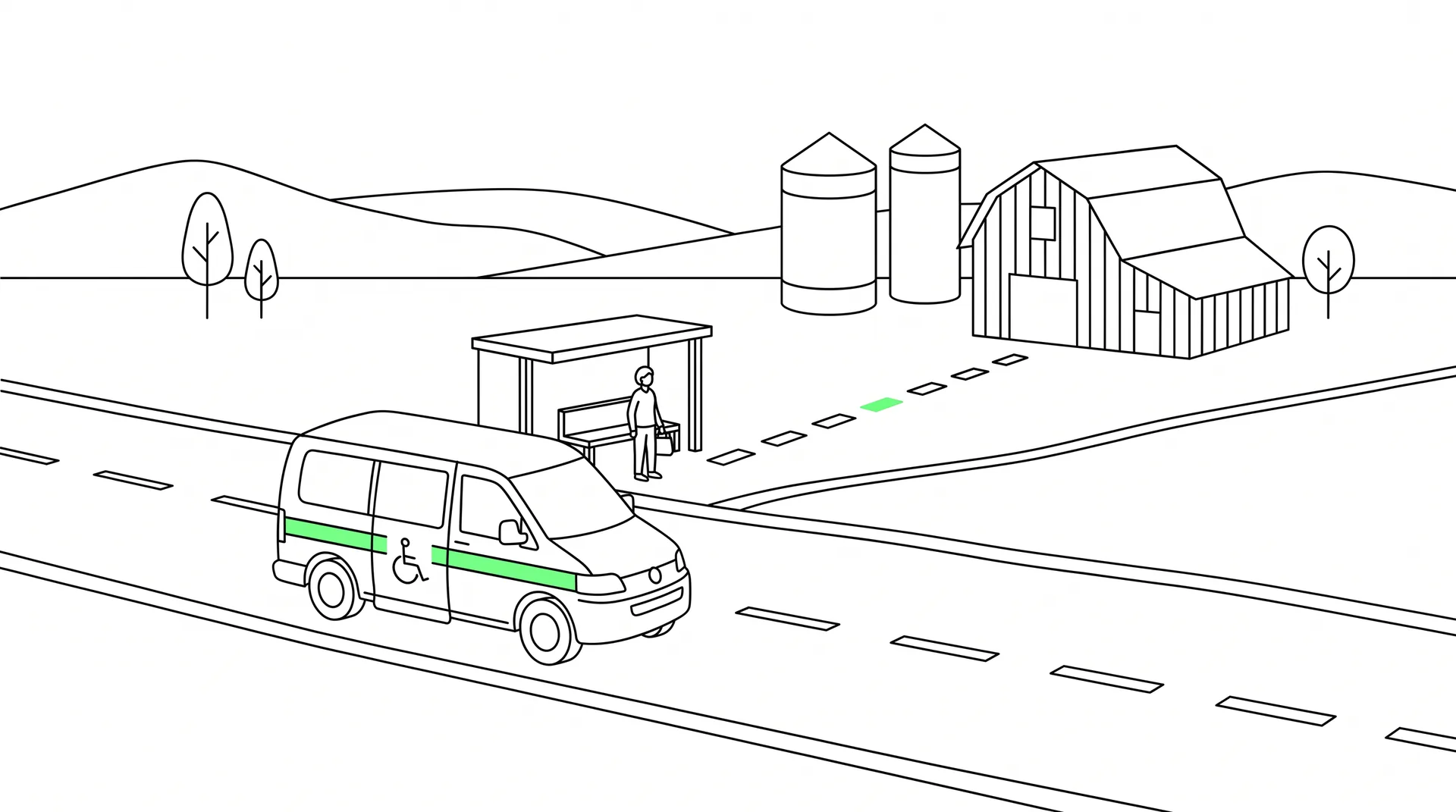



How the platform is used
US agencies usually write microtransit into a procurement when they want app-based, dynamically routed vans open to the general public. FTA NTD FAQ language is blunt: in most cases microtransit is reported as Demand Response. That classification drives how you count trips, hours and vehicles.
National RTAP, citing 49 CFR 37.3, reminds buyers that demand responsive service is any transport that is not fixed route. Complementary ADA paratransit is a different obligation. A microtransit zone that is open to the public still has to meet ADA rules for on-demand service, including equivalent service if inaccessible vehicles are bought.
maas.maker is European operations software offered to US buyers. It does not claim FTA grant awards, does not file NTD reports for you, and does not replace your Title VI program. It runs the bookings, the board and the exports.
US microtransit software
Written for United States agencies that are procuring microtransit as a general-public on-demand zone, often as a replacement or complement to a thin fixed route.

Zone operations
Publish a service area and hours. Bookings outside the zone are refused instead of becoming unauthorised deadhead.

Shared-ride public service
Pooling is the default for general-public microtransit. Isolated trips are the exception, not the product.

Demand-response counts
Unlinked passenger trips and vehicle hours export in a form a reporter can reconcile with NTD Demand Response.

Accessible fleet flags
Wheelchair-capable vehicles are identifiable so mixed fleets do not hide an equivalent-service problem.
How the platform is used
US agencies usually write microtransit into a procurement when they want app-based, dynamically routed vans open to the general public. FTA NTD FAQ language is blunt: in most cases microtransit is reported as Demand Response. That classification drives how you count trips, hours and vehicles.
National RTAP, citing 49 CFR 37.3, reminds buyers that demand responsive service is any transport that is not fixed route. Complementary ADA paratransit is a different obligation. A microtransit zone that is open to the public still has to meet ADA rules for on-demand service, including equivalent service if inaccessible vehicles are bought.
Request a demoHow a tenant goes live
Scope
We walk through service type, fleet, booking channels and the reports you already have to file.
Configure
Branding, stops, hours, vehicle classes and assignment rules land in one tenant.
Train
Dispatchers, drivers and coordinators practise on the live board before opening hours.
Go live
The first operating weeks are coached. Exceptions, not the happy path, are the real product.
Modules you can combine. One tenant.
Start with booking, dispatch and the driver app. Add passenger apps, pooling rules, feeds and exports when the service needs them.
Explore the modulesA configured walkthrough, not a marketing video only. We look at your service type and fleet.
Questions teams ask
White-label software for booking, dispatching and reporting demand-responsive transport. It is not a consumer ride-hail brand.
No. Customers run the service with their own fleet or contracted carriers.
USD is the list-price base. You can switch the calculator to Australian dollars, New Zealand dollars or euro. Final contract currency is confirmed in a proposal.
Yes. Book a conversation and we walk through a configured tenant for your service type.
Plan a working demo
Share fleet size, service type and the outcome you need. We reply with a working demo path, not a generic brochure.