New Zealand on-demand public transport
New Zealand uses on-demand public transport and demand responsive transport as the public terms. Total Mobility is a separate, subsidised accessible scheme. Do not mix the two in one product description.



How the platform is used
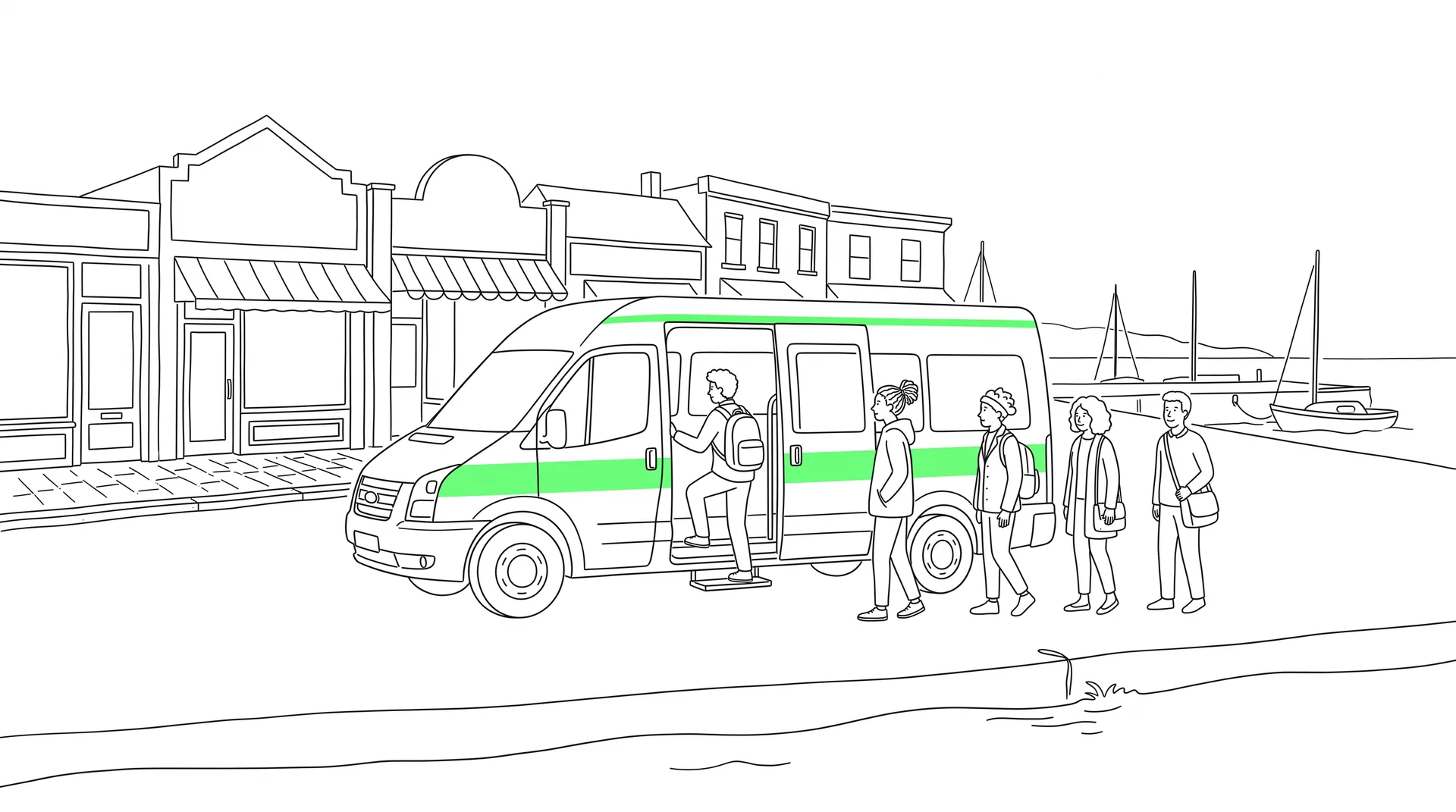
Several New Zealand regions have trialled or operated on-demand public buses as a complement to infrequent fixed routes. The procurement language is public transport, not microtransit.
Waka Kotahi and regional councils set public-transport policy. Software suppliers do not. maas.maker can run the bookings and the board for an operator contracted by a council.
Accessible public on-demand still has to carry wheelchair users on an equivalent basis. Total Mobility remains the separate door-to-door subsidy for people who cannot use ordinary PT. Use the Total Mobility page for that scheme.
New Zealand on-demand public transport
New Zealand uses on-demand public transport and demand responsive transport as the public terms. Total Mobility is a separate, subsidised accessible scheme. Do not mix the two in one product description.
Public booking
Anyone in the zone can request a trip during published hours, subject to capacity.

Shared public rides
Pooling is expected in a public product. Dedicated vehicles are the exception.

Regional control rooms
A council contractor may dispatch from a small office. The UI has to work there.

PT contract reports
Boardings, hours and refusals for the regional public transport authority.
How the platform is used
Several New Zealand regions have trialled or operated on-demand public buses as a complement to infrequent fixed routes. The procurement language is public transport, not microtransit.
Waka Kotahi and regional councils set public-transport policy. Software suppliers do not. maas.maker can run the bookings and the board for an operator contracted by a council.
Request a demoHow a tenant goes live
Scope
We walk through service type, fleet, booking channels and the reports you already have to file.
Configure
Branding, stops, hours, vehicle classes and assignment rules land in one tenant.
Train
Dispatchers, drivers and coordinators practise on the live board before opening hours.
Go live
The first operating weeks are coached. Exceptions, not the happy path, are the real product.
Modules you can combine. One tenant.
Start with booking, dispatch and the driver app. Add passenger apps, pooling rules, feeds and exports when the service needs them.
Explore the modulesA configured walkthrough, not a marketing video only. We look at your service type and fleet.
Questions teams ask
White-label software for booking, dispatching and reporting demand-responsive transport. It is not a consumer ride-hail brand.
No. Customers run the service with their own fleet or contracted carriers.
USD is the list-price base. You can switch the calculator to Australian dollars, New Zealand dollars or euro. Final contract currency is confirmed in a proposal.
Yes. Book a conversation and we walk through a configured tenant for your service type.
Plan a working demo
Share fleet size, service type and the outcome you need. We reply with a working demo path, not a generic brochure.