Demand responsive transport software
Flexible public transport software for services that take bookings instead of running empty loops. The usual term in Australia, New Zealand and much of Europe.
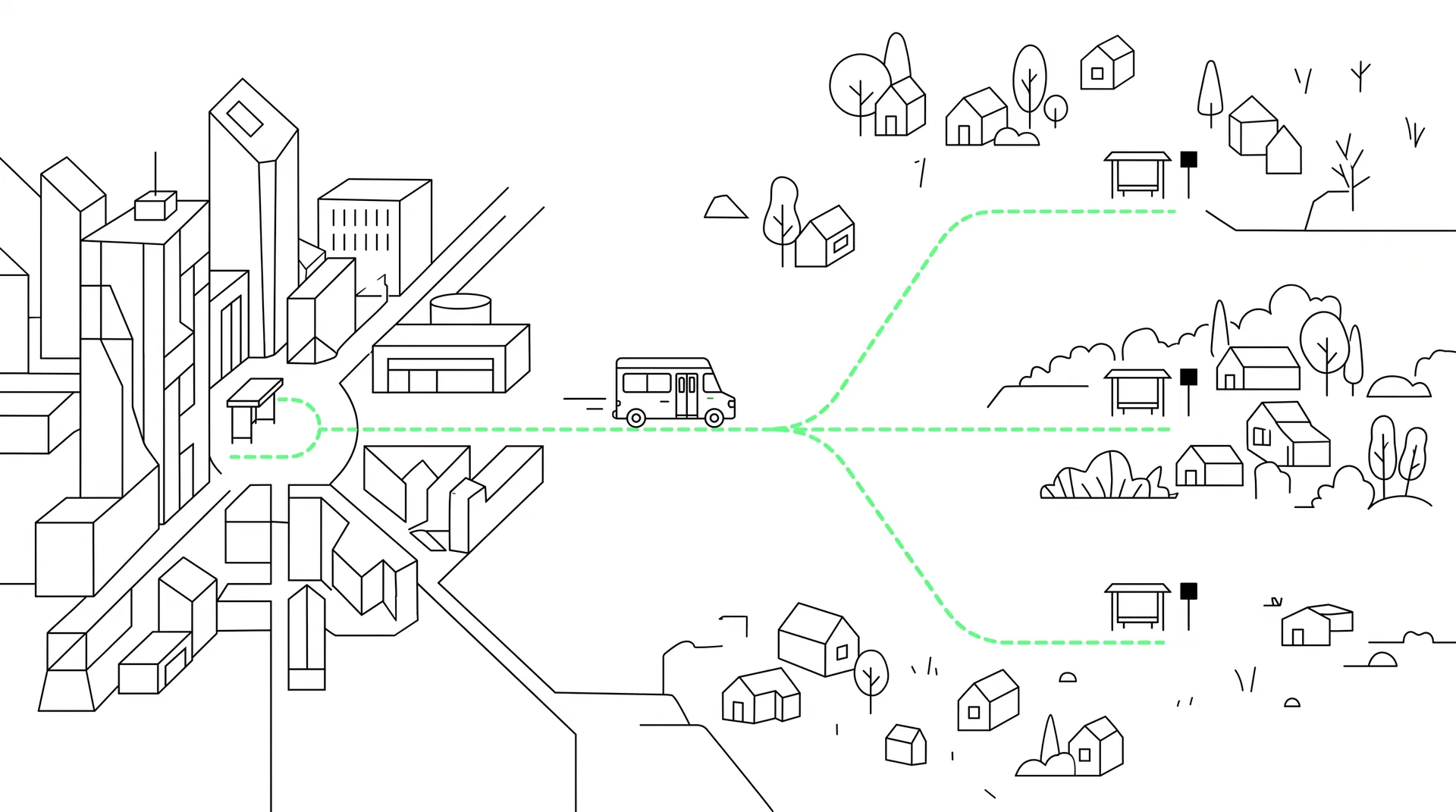



How the platform is used
Demand responsive transport, or DRT, is public transport that changes path according to booked demand. It includes many-to-many local services, many-to-one town links and one-to-many school or clinic runs.
Australian and New Zealand agencies usually search for DRT or on-demand public transport rather than microtransit. The operational problem is the same: publish a service promise, take bookings, assign vehicles and prove the service ran.
maas.maker stores the stop set, the vehicle roster, the booking horizon and the pooling rules. It does not invent a state funding programme.
Demand responsive transport software
Flexible public transport software for services that take bookings instead of running empty loops. The usual term in Australia, New Zealand and much of Europe.
Booked, not flagged down
Passengers request a trip. The vehicle does not wander hoping to be hailed, which keeps deadhead visible.

Many-to-many sharing
Compatible origins and destinations share a vehicle within the wait and ride-time limits you publish.

Day-of control
Dispatchers insert hospital discharge trips, weather cancellations and school early finishes without rebuilding the day from scratch.

Contract reporting
Completed trips, refused trips and vehicle hours can be exported for a state or regional contract.
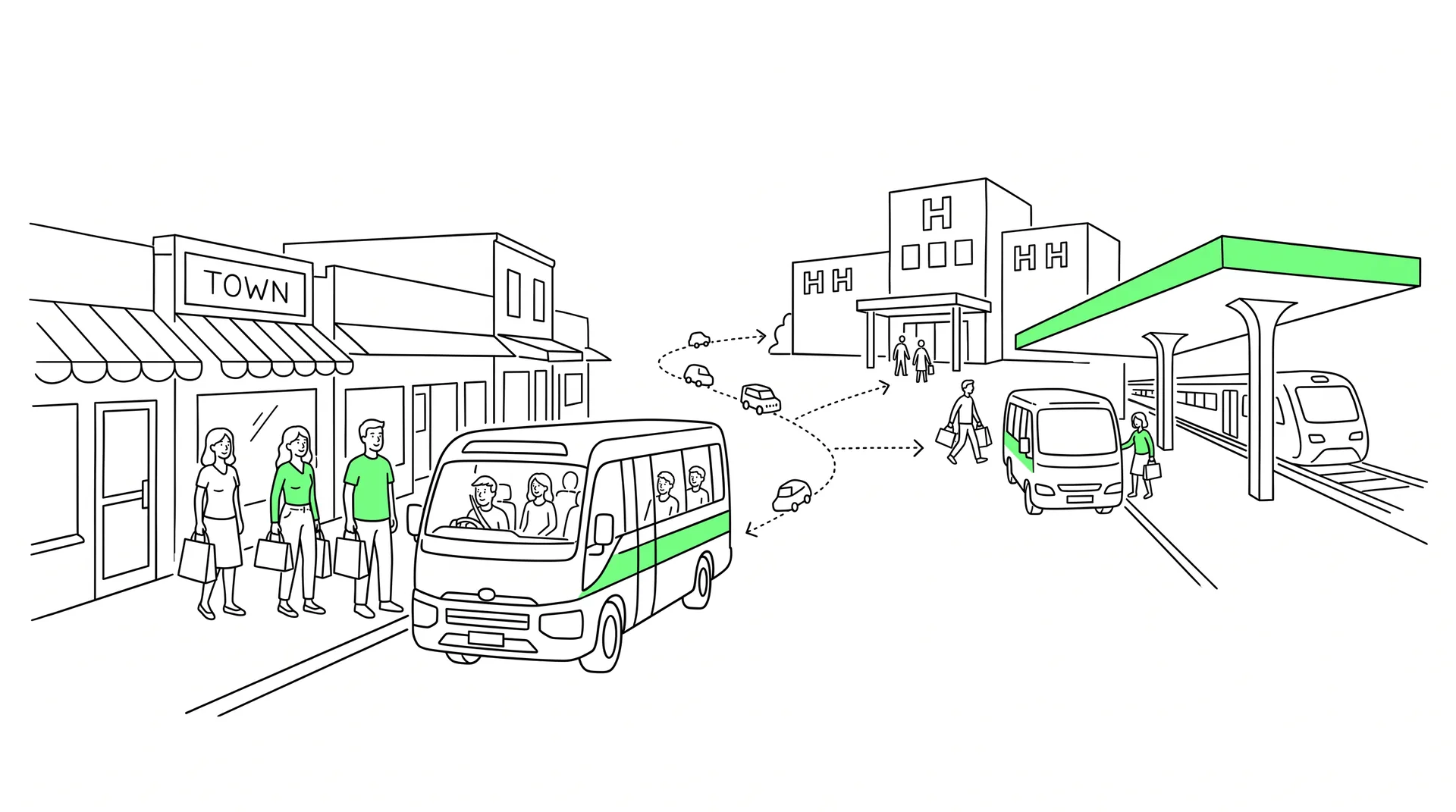
DRT is the working word
On US pages we use microtransit and demand-response because those are the FTA terms. On Australian and New Zealand pages we use DRT and on-demand public transport because that is how operators and governments write.
Choose the landing page that matches the procurement text you actually have.
Request a demoHow a tenant goes live
Scope
We walk through service type, fleet, booking channels and the reports you already have to file.
Configure
Branding, stops, hours, vehicle classes and assignment rules land in one tenant.
Train
Dispatchers, drivers and coordinators practise on the live board before opening hours.
Go live
The first operating weeks are coached. Exceptions, not the happy path, are the real product.
Modules you can combine. One tenant.
Start with booking, dispatch and the driver app. Add passenger apps, pooling rules, feeds and exports when the service needs them.
Explore the modulesA configured walkthrough, not a marketing video only. We look at your service type and fleet.
Questions teams ask
White-label software for booking, dispatching and reporting demand-responsive transport. It is not a consumer ride-hail brand.
No. Customers run the service with their own fleet or contracted carriers.
USD is the list-price base. You can switch the calculator to Australian dollars, New Zealand dollars or euro. Final contract currency is confirmed in a proposal.
Yes. Book a conversation and we walk through a configured tenant for your service type.
Plan a working demo
Share fleet size, service type and the outcome you need. We reply with a working demo path, not a generic brochure.