Ride pooling
Sharing a vehicle is an operating rule, not a slogan. The engine proposes combinations. Dispatchers can refuse them.
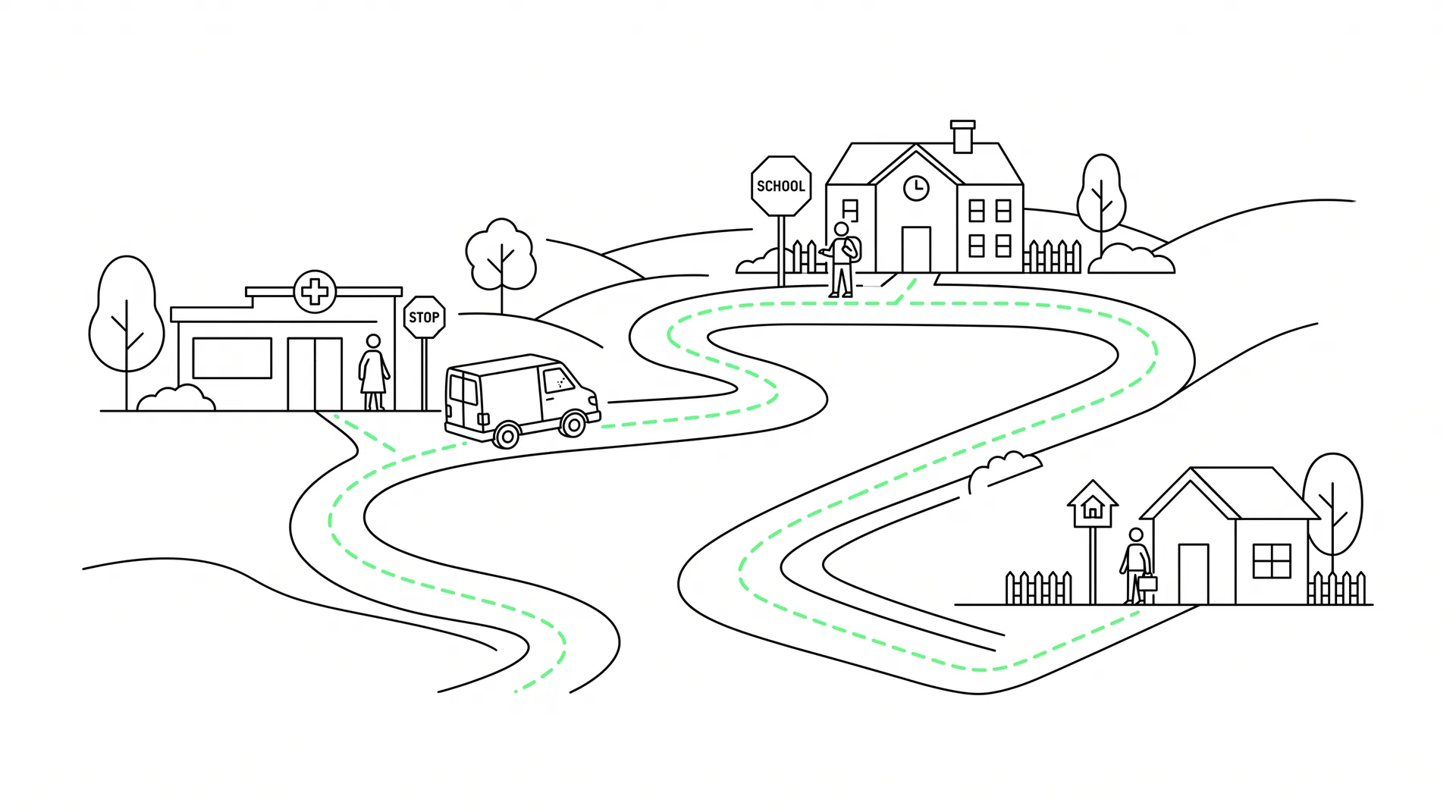



How the platform is used
Pooling is how on-demand services avoid becoming one car per person. The constraints are wait time, ride-time factor, vehicle capacity, accessibility and whether a trip is marked isolated.
European operations such as Rufbus RUDI in the Lower Drau valley added pooling in a software update because manual dispatch could not keep combining trips during the day. That is a documented operating reason, not a marketing metaphor.
The engine does not promise a load factor. It applies the rules you publish to riders.
Ride pooling
Sharing a vehicle is an operating rule, not a slogan. The engine proposes combinations. Dispatchers can refuse them.

Compatibility checks
Origin, destination, time window and capacity must fit. If they do not, the trips stay separate.

Human veto
A dispatcher can block a share when a rider, a contract or a medical note requires a dedicated vehicle.

Shared-ride rate
You can see how often pooling actually happened. That number is more honest than a simulated saving.

Honest windows
Riders are given a pickup window that already includes reasonable sharing, not a taxi promise.
How the platform is used
Pooling is how on-demand services avoid becoming one car per person. The constraints are wait time, ride-time factor, vehicle capacity, accessibility and whether a trip is marked isolated.
European operations such as Rufbus RUDI in the Lower Drau valley added pooling in a software update because manual dispatch could not keep combining trips during the day. That is a documented operating reason, not a marketing metaphor.
Request a demoHow a tenant goes live
Scope
We walk through service type, fleet, booking channels and the reports you already have to file.
Configure
Branding, stops, hours, vehicle classes and assignment rules land in one tenant.
Train
Dispatchers, drivers and coordinators practise on the live board before opening hours.
Go live
The first operating weeks are coached. Exceptions, not the happy path, are the real product.
Modules you can combine. One tenant.
Start with booking, dispatch and the driver app. Add passenger apps, pooling rules, feeds and exports when the service needs them.
Explore the modulesA configured walkthrough, not a marketing video only. We look at your service type and fleet.
Questions teams ask
White-label software for booking, dispatching and reporting demand-responsive transport. It is not a consumer ride-hail brand.
No. Customers run the service with their own fleet or contracted carriers.
USD is the list-price base. You can switch the calculator to Australian dollars, New Zealand dollars or euro. Final contract currency is confirmed in a proposal.
Yes. Book a conversation and we walk through a configured tenant for your service type.
Plan a working demo
Share fleet size, service type and the outcome you need. We reply with a working demo path, not a generic brochure.